

Plasmalogens maintain brain cell membrane flexibility by altering lipid packing and curvature within the bilayer. Their unique vinyl ether bond creates a distinct molecular shape that prevents tight packing, allowing membranes to remain fluid and responsive. This structural role is critical for synaptic vesicle fusion and signal transmission. Plasmalogen Science explores how these specialized ether phospholipids support the dynamic architecture of the nervous system.
The Structural Role of the Vinyl Ether Bond
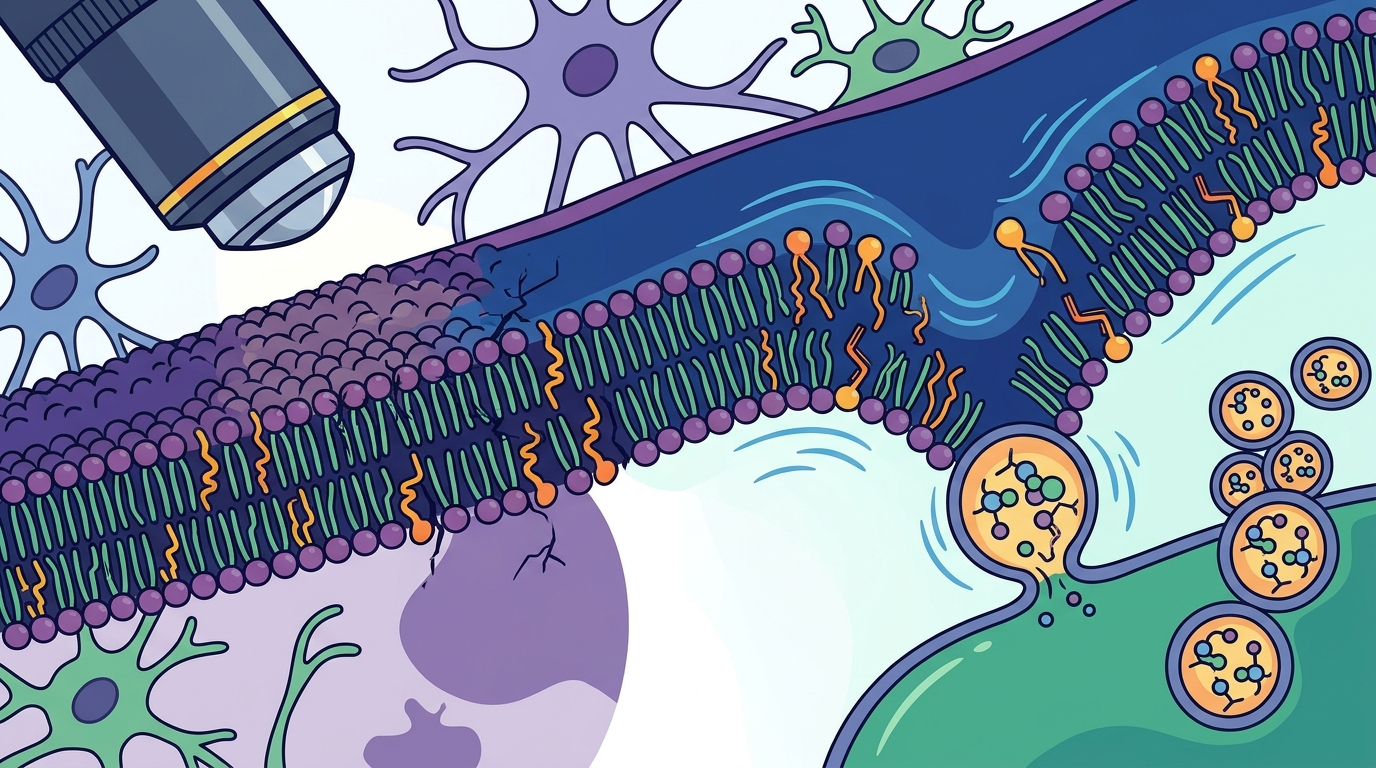
A plasmalogen is a specialized ether phospholipid characterized by a vinyl ether bond at the sn-1 position of the glycerol backbone. This chemical difference distinguishes them from standard ester-linked phospholipids. The vinyl ether bond creates a kink in the fatty acid chain, which prevents the lipid tails from packing tightly together. This loose packing increases the free volume within the membrane, directly contributing to fluidity.
In the brain, where membrane dynamics are essential for rapid signaling, this structural property is vital. The molecular shape of plasmalogens influences how the membrane bends and curves. This curvature is necessary for the formation of synaptic vesicles and their subsequent fusion with the presynaptic membrane. Without this flexibility, the speed and efficiency of neurotransmitter release would be compromised.
Membrane Fluidity and Synaptic Responsiveness
Membrane fluidity is the measure of how easily lipids and proteins move within the cell boundary. High fluidity allows receptors and ion channels to diffuse and cluster, which is essential for signal reception. Plasmalogens help maintain an optimal level of fluidity, preventing the membrane from becoming too rigid or too disordered. This balance ensures that synaptic clefts remain functional and that postsynaptic receptors can respond to chemical signals effectively.
The brain relies on this responsiveness for learning and memory. Synaptic plasticity, the ability of synapses to strengthen or weaken over time, depends on the physical rearrangement of membrane components. Plasmalogens facilitate these rearrangements by maintaining a fluid environment. This allows the brain to adapt to new information and form new neural connections. The structural integrity provided by plasmalogens thus supports the cognitive functions that define neurological health.
Protection Against Oxidative Stress
Oxidative stress is a condition where reactive oxygen species damage cellular components, including lipids. The vinyl ether bond in plasmalogens acts as a sacrificial antioxidant, absorbing oxidative damage before it reaches other critical membrane structures. This protective mechanism helps preserve membrane integrity and fluidity under stress. By mitigating lipid peroxidation, plasmalogens prevent the stiffening and fragmentation of cell membranes that often accompany oxidative injury.
In the brain, which is highly susceptible to oxidative stress due to its high oxygen consumption, this antioxidant role is particularly important. Maintaining membrane flexibility in the face of oxidative pressure helps protect neurons from degeneration. Plasmalogen Science highlights how this dual role in structure and protection makes plasmalogens key players in maintaining the resilience of brain cell membranes. The ability to withstand oxidative stress while remaining fluid is a hallmark of healthy neuronal function.
Implications for Aging and Neurological Health
Aging is associated with a decline in plasmalogen levels, which can lead to reduced membrane fluidity. As plasmalogens decrease, membranes may become more rigid and less responsive. This change can impair synaptic function and contribute to age-related cognitive decline. Understanding this relationship helps explain why maintaining healthy plasmalogen levels is important for long-term brain health. The loss of membrane flexibility is a subtle but significant factor in the aging process.
Research into plasmalogens offers insights into how to support neurological resilience. By focusing on the structural and protective roles of these lipids, scientists can better understand the mechanisms of neurodegeneration. Plasmalogen Science provides resources on how advanced lipidomics can measure these changes, offering a window into membrane health. This knowledge is crucial for developing strategies to preserve cognitive function and brain flexibility as we age.
Key Takeaways
- Plasmalogens are ether phospholipids with a vinyl ether bond that prevents tight lipid packing.
- This structural feature increases membrane fluidity, which is essential for synaptic vesicle fusion.
- Fluid membranes allow receptors and ion channels to move and cluster, enhancing signal responsiveness.
- The vinyl ether bond acts as a sacrificial antioxidant, protecting membranes from oxidative damage.
- Declining plasmalogen levels with age can reduce membrane flexibility and impact cognitive function.
- Plasmalogens support synaptic plasticity, which is the physical basis of learning and memory.
Frequently Asked Questions
What is the primary structural difference between plasmalogens and standard phospholipids?
Plasmalogens contain a vinyl ether bond at the sn-1 position, whereas standard phospholipids typically have an ester bond. This difference creates a kink in the fatty acid chain, affecting how the lipids pack together in the membrane.
How does membrane fluidity affect brain function?
Fluidity allows membrane proteins and receptors to move and interact efficiently. This is critical for the rapid signal transmission and synaptic plasticity required for thought, memory, and learning.
Why are plasmalogens important for synaptic vesicles?
Synaptic vesicles must bend, dock, and fuse with the cell membrane to release neurotransmitters. Plasmalogens help maintain the curvature and fluidity necessary for these dynamic processes to occur efficiently.
Can oxidative stress reduce membrane flexibility?
Yes, oxidative stress can damage lipids, leading to cross-linking and stiffening of the membrane. Plasmalogens help mitigate this by acting as antioxidants, preserving the fluidity and integrity of the membrane.
How do plasmalogen levels change with age?
Plasmalogen levels generally decline with age. This reduction can lead to decreased membrane fluidity and responsiveness, which may contribute to age-related changes in cognitive and neurological function.
Where are plasmalogens most concentrated in the body?
Plasmalogens are highly concentrated in the brain, heart, and immune cells. The brain, in particular, relies on high levels of plasmalogens to support the complex membrane dynamics of neurons and glial cells.
Explore Plasmalogen Science Further
Understanding the intricate relationship between plasmalogens and membrane health is a growing field in neuroscience. For a deeper dive into the structural biology of these lipids, you can read about what plasmalogens are and their unique chemical properties. The role of these lipids in the nervous system is further detailed in our guide on how the synapse works. Additionally, exploring cell membranes explained provides the foundational context for understanding how lipid composition influences cellular behavior. To see how these factors impact long-term health, consider reading about how plasmalogens influence aging. Plasmalogen Science is dedicated to providing clear, evidence-based information on these critical biological processes.