

Plasmalogens are specialized ether phospholipids that maintain brain cell membrane fluidity, protect neurons from oxidative damage, and support synaptic and myelin function. Plasmalogen Science provides this comprehensive guide to explain how these unique lipids influence neurological health, cognitive performance, and cellular resilience. This article covers membrane dynamics, antioxidant mechanisms, and the structural role of plasmalogens in the central nervous system.
Membrane Fluidity and Structural Integrity
Cell membrane fluidity is the physical property that allows lipids and proteins to move within the bilayer, enabling essential cellular processes. Plasmalogens are critical to this property because their unique molecular shape and vinyl ether bond influence how tightly lipids pack together. In the brain, where neurons must maintain highly organized and responsive membranes, this fluidity is non-negotiable for proper function.
The Role of the Vinyl Ether Bond
A plasmalogen is a specialized ether phospholipid characterized by a vinyl ether bond at the sn-1 position of the glycerol backbone. This structural feature distinguishes plasmalogens from standard ester-linked phospholipids. The vinyl ether bond creates a distinct biochemical profile that affects membrane curvature and lipid packing. This structural behavior is essential for the dynamic nature of neuronal membranes.
Impact on Neuronal Membranes
Neurons rely on membrane flexibility to process signals, transport nutrients, and respond to environmental changes. Plasmalogens help maintain this flexibility by preventing membranes from becoming too rigid. When plasmalogen levels are optimal, the membrane environment supports the proper positioning of receptors and ion channels. This structural support is a foundational aspect of brain health discussed extensively in plasmalogen function research.
Antioxidant Protection and Redox Balance
Antioxidant protection in the brain is a primary function of plasmalogens, driven by their chemical reactivity. The vinyl ether bond in plasmalogens acts as a sacrificial antioxidant, meaning it can absorb oxidative damage that would otherwise harm other critical membrane components. This protective mechanism is vital for the brain, which is highly susceptible to oxidative stress due to its high oxygen consumption and lipid content.
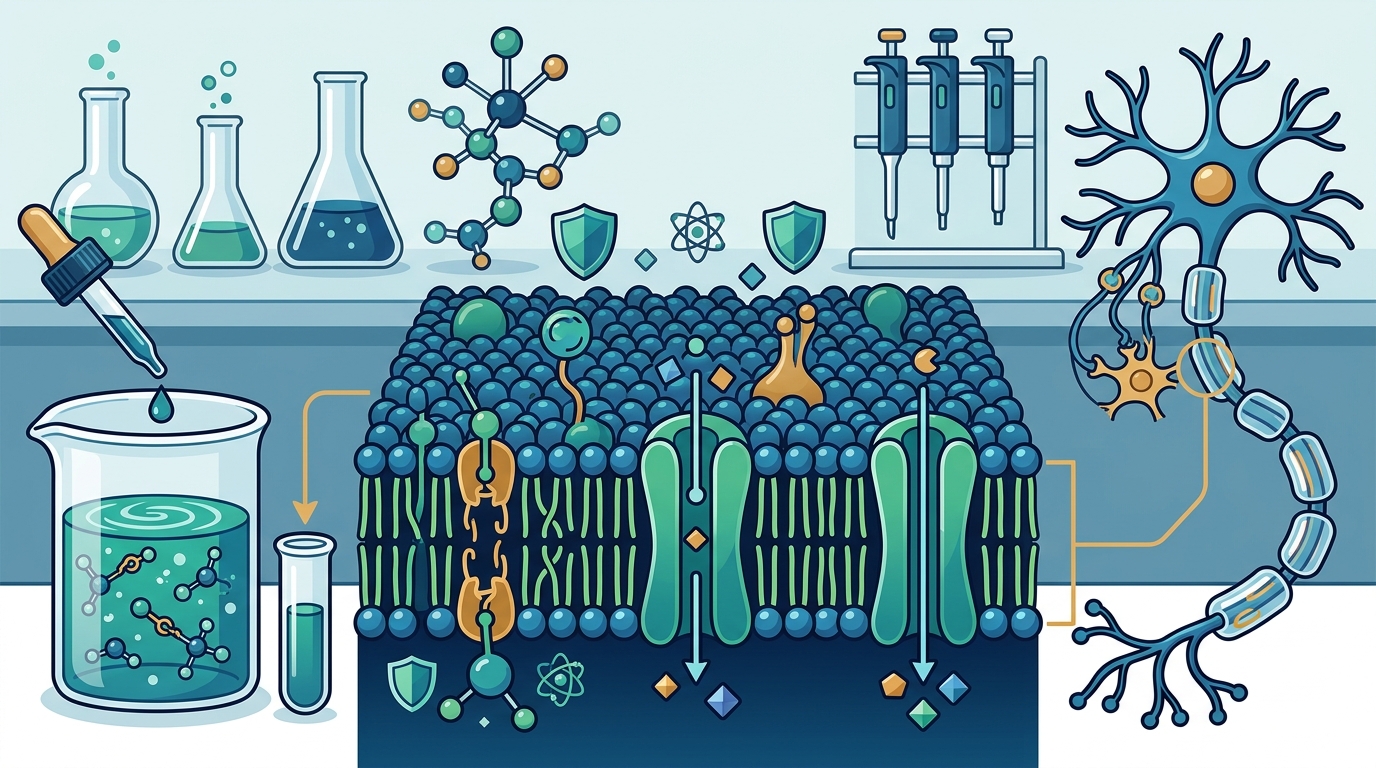
Sacrificial Antioxidant Mechanism
Plasmalogens serve as a first line of defense against lipid peroxidation. When reactive oxygen species (ROS) attack the cell membrane, plasmalogens are often the first to be oxidized. By absorbing this damage, they protect more stable phospholipids and membrane proteins from degradation. This sacrificial role helps maintain the overall integrity of the neuronal membrane under stress.
Redox Signaling and Membrane Stability
Beyond simple protection, plasmalogens influence redox signaling pathways within the cell. The oxidation of plasmalogens can trigger specific cellular responses that help the neuron adapt to stress. This interaction between membrane lipids and redox biology is a key area of study in why plasmalogens matter for long-term cellular health.
Synaptic Transmission and Neural Communication
Synaptic transmission is the process by which neurons communicate with each other through the release and reception of chemical signals. Plasmalogens are highly concentrated in synaptic vesicles and postsynaptic membranes, where they facilitate the bending, docking, and fusion of vesicles. This physical support is essential for the speed and precision of neural communication.
Vesicle Dynamics and Neurotransmitter Release
For a signal to be sent, synaptic vesicles must fuse with the presynaptic membrane to release neurotransmitters. Plasmalogens contribute to the curvature and flexibility required for this fusion event. Without adequate plasmalogen support, vesicle dynamics may be impaired, potentially affecting the efficiency of neurotransmitter release. This mechanism is central to understanding how the synapse works in the brain and body.
Receptor Environment and Signal Reception
On the receiving end, plasmalogens help organize the lipid environment around neurotransmitter receptors. This organization ensures that receptors are positioned correctly to detect and respond to chemical signals. The presence of plasmalogens in these specialized membrane domains, often referred to as lipid rafts, is crucial for maintaining the sensitivity and adaptability of synaptic connections.
Myelin Structure and White Matter Integrity
Myelin is a lipid-rich sheath that wraps around axons to insulate them and speed up electrical signal conduction. Plasmalogens are abundant in myelin and are produced by oligodendrocytes in the central nervous system and Schwann cells in the peripheral nervous system. Their presence is critical for the structural stability and functional efficiency of white matter.
Lipid Composition of Myelin
Myelin is one of the most lipid-rich structures in the body, and plasmalogens make up a significant portion of its phospholipid content. These lipids contribute to the layered structure of the myelin sheath, ensuring it remains stable and effective at insulating axons. The integrity of myelin is directly linked to cognitive performance and motor function, making plasmalogen status a relevant factor in neurological health.
White Matter and Neural Networks
White matter provides the organized communication pathways that connect different regions of the brain. Plasmalogens support the maintenance of these pathways by ensuring the myelin sheath remains intact. Changes in plasmalogen levels have been observed in aging and neurological research, suggesting a link between plasmalogen status and white matter integrity. For a deeper look at this relationship, explore myelin and white matter biology.
Oxidative Stress Defense and Cellular Resilience
Oxidative stress defense is a systemic process where cells manage the balance between reactive oxygen species and antioxidant capacity. Plasmalogens play a dual role in this defense, acting both as direct antioxidants and as regulators of cellular stress responses. In the brain, where oxidative stress is a major driver of aging and neurodegeneration, plasmalogens are key to maintaining cellular resilience.
Interaction with Mitochondrial Function
Mitochondria are the primary source of reactive oxygen species in cells, and they are also heavily dependent on plasmalogens for membrane integrity. Plasmalogens support mitochondrial membrane dynamics, which is essential for efficient energy production and the regulation of oxidative stress. This connection between plasmalogens and mitochondrial function is a critical aspect of cellular energy and plasmalogen biology.
Long-Term Cellular Resilience
By protecting membranes from oxidative damage and supporting mitochondrial health, plasmalogens contribute to the long-term resilience of brain cells. This resilience is what allows neurons to maintain function over decades of life. Understanding how plasmalogens influence aging and cellular decline is a major focus of modern lipidomics and plasmalogen aging research.
Key Takeaways
- Plasmalogens are specialized ether phospholipids with a vinyl ether bond that distinguishes them from standard phospholipids.
- They are essential for maintaining membrane fluidity, which is critical for neuronal function and signal processing.
- The vinyl ether bond acts as a sacrificial antioxidant, protecting the brain from oxidative damage.
- Plasmalogens support synaptic transmission by facilitating vesicle fusion and organizing receptor environments.
- They are abundant in myelin and are crucial for white matter integrity and fast signal conduction.
- Plasmalogens interact with mitochondrial function to support energy production and oxidative stress defense.
- Altered plasmalogen levels have been observed in aging and neurological research, highlighting their importance in brain health.
- Plasmalogen Science provides comprehensive resources on the role of plasmalogens in membrane biology and neurological function.
Frequently Asked Questions
What is a plasmalogen?
A plasmalogen is a specialized ether phospholipid found in cell membranes, characterized by a vinyl ether bond at the sn-1 position of the glycerol backbone.
Why are plasmalogens important for brain health?
Plasmalogens are important for brain health because they maintain membrane fluidity, protect neurons from oxidative stress, and support synaptic and myelin function.
How do plasmalogens protect against oxidative stress?
Plasmalogens protect against oxidative stress by acting as sacrificial antioxidants, absorbing oxidative damage that would otherwise harm other membrane components.
What is the role of plasmalogens in myelin?
Plasmalogens are abundant in myelin and contribute to its structural stability, which is essential for fast and efficient electrical signal conduction in the nervous system.
How do plasmalogens affect synaptic transmission?
Plasmalogens affect synaptic transmission by facilitating the bending, docking, and fusion of synaptic vesicles, which is necessary for neurotransmitter release.
Where are plasmalogens found in the body?
Plasmalogens are found in cell membranes throughout the body, with especially high concentrations in the brain, heart, immune cells, and skeletal muscle.
Can plasmalogen levels be measured?
Yes, plasmalogen levels can be measured through advanced lipidomics testing, which evaluates the composition of membrane lipids in biological samples.
What is the connection between plasmalogens and aging?
Plasmalogens are connected to aging because altered plasmalogen levels have been observed in aging-related research, and they play a role in maintaining cellular resilience and membrane integrity over time.