

A Step-by-Step Guide to Learning Ether Lipid Biochemistry Through Online Resources
Ether lipid biochemistry is a specialized field that explains how specialized lipids support cellular integrity, neurological function, and metabolic health. Recent research indicates that plasmalogens, the most abundant class of ether lipids, play a critical role in protecting cell membranes from oxidative damage. According to a 2024 review in the journal Frontiers in Aging Neuroscience, plasmalogen levels decline significantly with age, linking them to neurodegenerative processes. Understanding this biology is no longer limited to laboratory scientists. Today, anyone can access high-quality educational materials online to master the complex pathways of ether lipid synthesis and function.
Foundations of Ether Lipid Structure
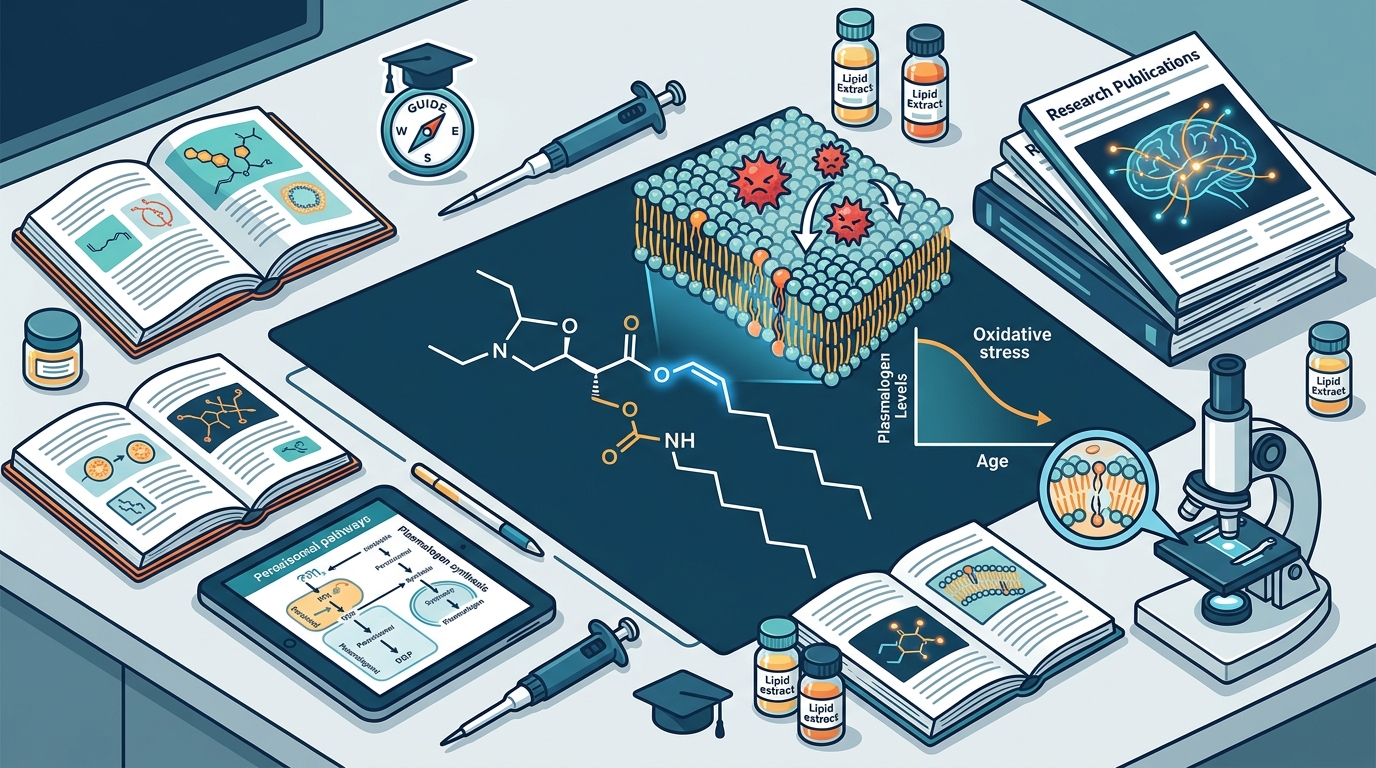
Before diving into complex pathways, you must understand the basic architecture of ether lipids. Plasmalogens are a type of glycerophospholipid characterized by a vinyl-ether bond at the sn-1 position of the glycerol backbone. This unique chemical structure distinguishes them from standard diacyl phospholipids found in most cell membranes.
Plasmalogens are specialized ether phospholipids found in cell membranes throughout the body. They are especially important in tissues with high structural, metabolic, and signaling demands, such as the brain, heart, and immune system. The vinyl-ether bond acts as a sacrificial antioxidant, absorbing free radicals to protect the rest of the cell membrane from oxidative stress.
To learn this effectively, start with resources that explain lipid bilayer dynamics. Look for diagrams that contrast sn-1 ether bonds with sn-2 ester bonds. Understanding this structural difference is the first step in grasping why ether lipids behave differently during inflammation and cellular repair.
Mapping the Biosynthetic Pathways
The synthesis of ether lipids is a multi-step process that occurs primarily in the peroxisomes and the endoplasmic reticulum. This pathway is highly regulated and requires several cofactors, including dihydroxyacetone phosphate (DHAP) and specific enzymes like alkyl-DHAP synthase (AGPS).
When studying online, focus on the peroxisomal entry point. The first committed step involves the alkylation of DHAP. If this step is impaired, it can lead to severe inherited disorders known as plasmalogen deficient diseases. These conditions often involve skeletal growth abnormalities, joint contractures, and reduced mobility. How Bones & Muscle are Affected in Plasmalogen Deficient Diseases provides a detailed look at these systemic impacts.
Key learning milestones for this section include:
- Tracing the conversion of DHAP to alkyl-DHAP.
- Understanding the role of the endoplasmic reticulum in ether lipid elongation.
- Identifying the enzymes responsible for the final headgroup attachment.
For a deeper dive into the cellular machinery, review How the Body Produces Plasmalogens: The Complete Science of Biosynthesis, Cellular Function, and Healthy Aging. This resource breaks down the enzymatic steps in a way that is accessible to students and health professionals alike.
Understanding Measurement and Biomarkers
Learning biochemistry is incomplete without understanding how these molecules are measured in a clinical or research setting. Traditional healthcare often focuses on symptoms, diagnosis, and treatment after problems become obvious. That approach is essential in acute care, but it does not always capture the earlier biological changes that may occur long before a condition is formally identified.
Advanced health measurement looks deeper. It examines patterns in metabolism, inflammation, cellular energy, lipid biology, oxidative stress, cardiovascular function, hormone signaling, nutrient status, immune activity, organ function, and biological aging. The Importance of Advanced Health Measurements in Health and Longevity explains why standard testing may miss deeper changes in lipid composition.
When evaluating online courses or articles, check if they discuss lipidomics. Lipidomics is the large-scale study of lipids within cells, tissues, and organisms. It allows researchers to quantify plasmalogen levels and identify specific species that are elevated or depleted. Understanding these biomarkers is crucial for anyone interested in the clinical application of ether lipid science.
Health Implications and Disease Links
Ether lipids are not just structural components; they are active participants in cellular signaling and immune response. Deficiencies in plasmalogens have been linked to a variety of age-related conditions, including cognitive decline, cardiovascular disease, and metabolic syndrome.
The metabolic system’s role in plasmalogen deficient diseases is complex. It involves disrupted energy production, altered inflammation pathways, and impaired cellular repair mechanisms. The Metabolic System’s Role in Plasmalogen Deficient Diseases outlines how these disruptions occur at the cellular level.
Furthermore, the cognitive and neurological systems are heavily dependent on plasmalogen integrity. Synapses, the communication sites between nerve cells, rely on membrane fluidity and lipid composition for proper function. How The Synapse Works in the Brain & Body details how ether lipids support neurotransmitter release and synaptic plasticity.
Insights from Animal Research
Animal models have been instrumental in uncovering the biological roles of ether lipids. Research on horses, pets, and laboratory mice has revealed how plasmalogens support mobility, recovery, and cellular resilience. These studies provide valuable data on how ether lipid supplementation or deficiency affects physical performance and aging.
For example, Plasmalogens, Mobility, and Recovery in Horses and Active Animals highlights the connection between lipid health and physical endurance. Similarly, How Plasmalogens Support Healthy Aging and Cellular Resilience in Pets offers insights into the aging process in companion animals.
When studying online, compare human data with animal models to understand conserved biological pathways. This comparative approach helps solidify your understanding of how ether lipids function across species.
Key Takeaways
- Structural Uniqueness: Plasmalogens are defined by a vinyl-ether bond at the sn-1 position, providing antioxidant protection to cell membranes.
- Biosynthetic Complexity: Synthesis involves peroxisomal and endoplasmic reticulum pathways, requiring specific enzymes like AGPS.
- Clinical Measurement: Advanced lipidomics is required to accurately measure plasmalogen levels, as standard panels often miss these specific lipids.
- Neurological Impact: Plasmalogens are critical for synapse function, memory formation, and overall brain health.
- Disease Links: Deficiencies are associated with skeletal abnormalities, muscle tone issues, and cognitive decline.
- Research Scope: Animal studies provide key insights into mobility, recovery, and aging processes related to ether lipids.
- Learning Path: Start with structural basics, move to biosynthesis, and then explore clinical applications and measurement techniques.
Frequently Asked Questions
What are ether lipids and why are they important?
Ether lipids are a class of lipids characterized by an ether bond at the sn-1 position of the glycerol backbone. They are important because they protect cell membranes from oxidative stress and play a key role in cellular signaling and immune function.
How are plasmalogens synthesized in the body?
Plasmalogens are synthesized through a multi-step pathway that begins in the peroxisomes with the formation of alkyl-DHAP and continues in the endoplasmic reticulum with elongation and headgroup attachment.
Can standard blood tests detect plasmalogen levels?
Standard lipid panels typically do not measure plasmalogen levels. Advanced lipidomics or specialized biomarker testing is required to accurately assess plasmalogen status.
What diseases are linked to plasmalogen deficiency?
Plasmalogen deficiency is linked to severe inherited disorders like Zellweger spectrum disorders, as well as age-related conditions such as Alzheimer's disease, cardiovascular disease, and metabolic syndrome.
How do plasmalogens affect brain function?
Plasmalogens are essential for maintaining the integrity of neuronal membranes and synapses. They support neurotransmitter release, synaptic plasticity, and protection against neuroinflammation.
What role do peroxisomes play in ether lipid metabolism?
Peroxisomes are the primary site for the initial steps of ether lipid biosynthesis. They are responsible for the alkylation of DHAP, a critical step that cannot occur in the endoplasmic reticulum.
Are there animal studies on plasmalogens?
Yes, extensive research on horses, pets, and laboratory animals has shown that plasmalogens support mobility, recovery, and cellular resilience, providing valuable insights into their biological role.
How can I learn more about ether lipid biochemistry online?
You can learn more by exploring specialized scientific resources, reviewing peer-reviewed articles on lipidomics, and studying detailed guides on plasmalogen biosynthesis and health implications.
Start Your Learning Journey
Mastering ether lipid biochemistry requires a structured approach and access to reliable, up-to-date scientific information. Whether you are a student, a health professional, or a curious learner, the resources available today make it easier than ever to understand this complex field.
Begin by exploring our comprehensive guides on plasmalogen science. Visit our Home Page to access the latest research, biosynthesis pathways, and health implications. For detailed insights into cellular function, check out our What Are Plasmalogens section. To understand the clinical side, review our Plasmalogen Measurement & Biomarkers Overview.
Ready to dive deeper? Contact our team to discuss how ether lipid science can inform your research or health strategy. Visit our Contact Page to get started.