

Plasmalogen Membrane Structure: Why These Lipids Build Stronger, Healthier Cell Boundaries
Plasmalogens are essential for building strong cell membranes because their unique vinyl-ether bond provides exceptional resistance to oxidative stress and mechanical strain. As explained by Plasmalogen Science, these specialized ether phospholipids act as sacrificial antioxidants, protecting the broader lipid bilayer from degradation. This structural integrity is critical for maintaining cellular communication, energy production, and long-term tissue resilience.
The Unique Architecture of the Vinyl-Ether Bond
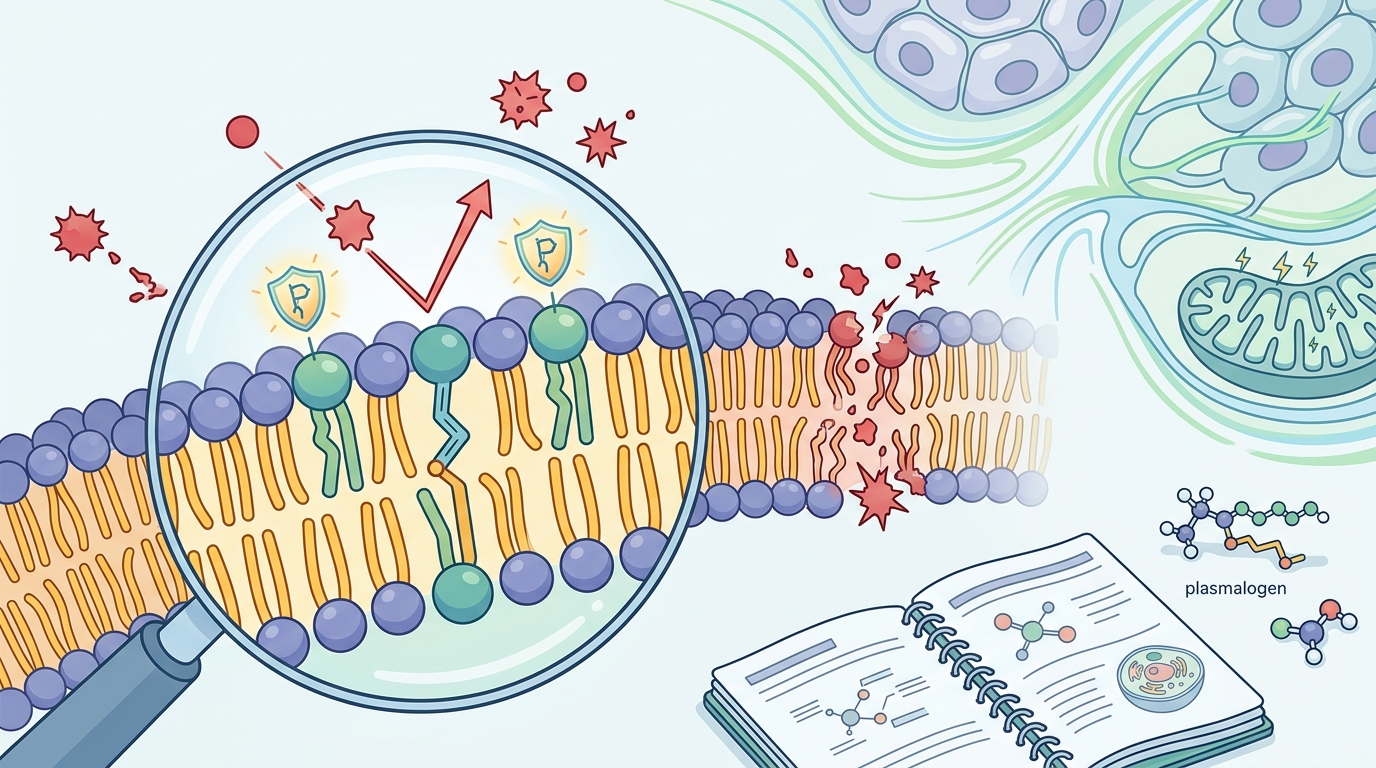
Standard phospholipids rely on ester bonds to attach fatty acids to the glycerol backbone. Plasmalogens differ fundamentally at the sn-1 position, where a vinyl-ether bond replaces the standard ester linkage. This single structural variation creates a molecule with distinct physical properties that standard lipids cannot replicate. The vinyl-ether bond is chemically reactive toward oxidants, which might seem like a weakness. However, this reactivity is the basis of their protective function.
When free radicals attack the cell membrane, the vinyl-ether bond intercepts the damage. It acts as a sacrificial target, absorbing oxidative stress before it can damage adjacent polyunsaturated fatty acid chains or membrane proteins. According to research published in PubMed, this high susceptibility to oxidative damage indicates a possible function in biological systems as an internal antioxidative defense. By protecting the core phosphodiester bond, plasmalogens ensure that the membrane remains intact even under high metabolic stress.
Regulating Fluidity and Lipid Packing
Cell membranes are not static walls; they are dynamic, fluid environments. The physical behavior of plasmalogens comes partly from their molecular shape and the nature of their vinyl-ether bond. These features influence how plasmalogens sit inside lipid bilayers and how they interact with surrounding lipids. This interaction is crucial for maintaining optimal membrane fluidity.
If a membrane is too rigid, proteins and receptors may not move properly, disrupting signaling. If it is too disorganized, signaling may become less efficient. Plasmalogens help regulate this balance by influencing lipid packing. As detailed in What Do Plasmalogens Do?, these lipids contribute to membrane organization, curvature, and flexibility. This regulation is particularly important in tissues with high metabolic demand, such as the brain and heart, where membrane dynamics must remain precise to support rapid electrical signaling and energy production.
Oxidative Stress and Antioxidant Defense
Oxidative stress is a primary driver of cellular aging and dysfunction. Reactive oxygen species (ROS) can damage lipids, proteins, and DNA within the cell. Plasmalogens serve as a first line of defense against this damage. Their concentration in specific tissues correlates with the level of oxidative stress those tissues face. For example, brain myelin possesses the highest content of ethanolamine plasmalogens, while heart muscle carries a higher proportion of choline plasmalogens.
This distribution is not random. It reflects the specific metabolic and oxidative environments of different organs. The vinyl-ether bond allows plasmalogens to scavenge free radicals, thereby protecting the structural integrity of the membrane. As noted in PMC, plasmalogens are essential for cellular membrane structure and function, with significant implications for neurological and inflammatory disorders. By mitigating oxidative damage, plasmalogens help preserve the functional capacity of cells over time, supporting healthy aging and longevity.
Peroxisomal Origins and Biosynthesis
Unlike most phospholipids, plasmalogen assembly begins inside peroxisomes. These small, single-membrane organelles are best known for fatty-acid oxidation but play a critical role in ether lipid synthesis. The first critical step involves the enzyme alkyl-dihydroxyacetone phosphate synthase (ALKH3PDH), which catalyzes the formation of an ether bond between a fatty alcohol and dihydroxyacetone phosphate. This step is rate-limiting and highly sensitive to the availability of substrates and cofactors.
After initiation in the peroxisome, the intermediate molecules are transferred to the endoplasmic reticulum for further processing into mature plasmalogens. This multi-step process highlights the complexity of plasmalogen biosynthesis. As described in How the Body Produces Plasmalogens, this pathway is distinct from the synthesis of standard phospholipids. Understanding this biosynthetic route is crucial for interpreting plasmalogen levels in health and disease. Declines in plasmalogen production can reflect peroxisomal dysfunction, which is often associated with aging and various chronic conditions.
Clinical Relevance and Biomarker Potential
Plasmalogen levels are not just structural metrics; they are potential biomarkers for cellular health. Reduced plasmalogen levels have been observed in the brain and serum of patients with Alzheimer's disease, often years before clinical diagnosis. Similarly, conditions such as Zellweger spectrum disorder and rhizomelic chondrodysplasia punctata are characterized by severely diminished plasmalogens. These findings suggest that plasmalogen status may serve as an early indicator of neurological and metabolic decline.
Measuring plasmalogens provides a deeper view into membrane lipid biology than standard lipid panels. As outlined in Plasmalogen Measurement & Biomarkers Overview, testing can evaluate ether lipid metabolism, oxidative stress biology, and peroxisomal function. This advanced measurement approach allows clinicians and researchers to identify patterns that standard tests may miss. By tracking plasmalogen levels over time, individuals can gain insights into their cellular resilience and potential risks for age-related diseases. according to Plasmalogens as biomarkers
Key Takeaways
- Plasmalogens are specialized ether phospholipids defined by a vinyl-ether bond at the sn-1 position.
- This bond acts as a sacrificial antioxidant, protecting the membrane from oxidative damage.
- Plasmalogens regulate membrane fluidity and lipid packing, ensuring efficient cellular signaling.
- Biosynthesis begins in peroxisomes, making plasmalogen levels a readout of peroxisomal health.
- Reduced plasmalogen levels are associated with aging, neurodegeneration, and metabolic disorders.
- Advanced lipidomics can measure plasmalogen status, offering insights into cellular resilience.
Frequently Asked Questions
What is the primary structural difference between plasmalogens and standard phospholipids?
Plasmalogens contain a vinyl-ether bond at the sn-1 position of the glycerol backbone, whereas standard phospholipids typically have an ester bond at this position.
Why is the vinyl-ether bond important for cell membrane health?
The vinyl-ether bond is reactive toward oxidants, allowing plasmalogens to act as sacrificial antioxidants that protect the rest of the membrane from oxidative damage.
Where are plasmalogens most concentrated in the body?
Plasmalogens are especially concentrated in the brain, nervous system, heart, immune cells, skeletal muscle, and retina.
How does the body produce plasmalogens?
Plasmalogen biosynthesis begins in peroxisomes and continues in the endoplasmic reticulum, involving a multi-step enzymatic process.
Can plasmalogen levels be measured in blood tests?
Yes, plasmalogen levels can be measured in blood samples, including plasma, serum, and red blood cells, using advanced lipidomics techniques.
What happens when plasmalogen levels decline with age?
Declining plasmalogen levels can lead to reduced membrane integrity, increased oxidative stress, and impaired cellular function, contributing to age-related diseases.
Conclusion
Plasmalogens are far more than simple structural components of cell membranes. Their unique vinyl-ether bond provides critical antioxidant protection, regulates membrane fluidity, and supports the complex signaling processes that keep cells healthy. As Plasmalogen Science continues to explore the role of these lipids in health and disease, it becomes clear that maintaining optimal plasmalogen levels is essential for long-term cellular resilience. By understanding the science behind plasmalogen membrane structure, we can better appreciate the intricate biology that underpins human health and aging. according to Plasmalogen as a