

Plasmalogens are specialized ether phospholipids that play a critical role in cellular membrane integrity and neurological health. Despite their importance, public understanding of these molecules is often clouded by oversimplified health trends and incomplete scientific summaries. Recent data indicates that plasmalogen levels naturally decline with age, a process linked to increased oxidative stress and reduced cellular resilience. Understanding the biological reality of plasmalogens is essential for making informed decisions about healthspan and longevity.
Myth 1: Plasmalogens Are Just Another Fat
A common misconception is that plasmalogens are simply a type of dietary fat like omega-3s or saturated fats. This view is biologically inaccurate. Plasmalogens are specialized ether phospholipids that serve as structural components of cell membranes rather than energy sources. They are unique because they contain a vinyl-ether bond at the sn-1 position, which distinguishes them from other phospholipids like phosphatidylcholine.
This structural difference is not trivial. The vinyl-ether bond allows plasmalogens to act as potent antioxidants, protecting cells from oxidative damage. They are not consumed for energy in the way triglycerides are. Instead, they are integral to the physical stability of the cell membrane and the function of embedded proteins. Confusing them with dietary fats leads to the false assumption that eating fatty fish alone will directly replenish plasmalogen stores without addressing the underlying biosynthetic pathways.
Myth 2: All Phospholipids Are Created Equal
Many health articles group plasmalogens with general phospholipids, implying they function identically. This is a significant error in lipid biology. Phospholipids are a broad class of molecules that form the basic structure of cell membranes, but plasmalogens represent a specific, rare subclass. While standard phospholipids use an ester bond at the sn-1 position, plasmalogens use an ether bond.
This distinction matters because the ether bond is more resistant to oxidative degradation than the ester bond. Consequently, plasmalogens provide a different type of protection to the cell. They are particularly abundant in tissues with high metabolic demands, such as the brain, heart, and immune cells. Treating them as interchangeable with standard phospholipids ignores their unique role in membrane fluidity, signal transduction, and protection against free radical damage.
Myth 3: Diet Alone Can Fully Restore Levels
It is often claimed that consuming specific foods can directly and significantly raise plasmalogen levels in the body. While nutrition is foundational, this claim oversimplifies human metabolism. The body synthesizes plasmalogens through a complex, multi-step process that occurs primarily in the peroxisomes and endoplasmic reticulum. This process requires specific precursors, including dihydroxyacetone phosphate and fatty acids.
Research into critical nutrients and standards for optimal plasmalogen synthesis highlights that the body's ability to produce these molecules depends on adequate levels of vitamins B12, folate, and specific amino acids. If the biosynthetic machinery is impaired due to age, genetic factors, or nutrient deficiencies, dietary intake alone may not be sufficient to restore optimal levels. This is why understanding the internal production process is just as important as external intake.
Myth 4: Plasmalogens Only Affect the Brain
While the neurological benefits of plasmalogens are well-documented, it is a myth that they only impact the brain. Plasmalogens are found in high concentrations throughout the body, particularly in the heart, lungs, and immune system. They are essential for the function of the myelin sheath, which insulates nerve fibers, but they also play a crucial role in cardiac rhythm and immune response.
For example, plasmalogens are vital for the function of alveolar cells in the lungs, helping to maintain surface tension and prevent collapse. In the heart, they support the integrity of cardiac cell membranes and protect against ischemic injury. The complete science of biosynthesis, cellular function, and healthy aging demonstrates that plasmalogen deficiency can lead to systemic issues, including cardiovascular strain and reduced immune resilience, not just cognitive decline.
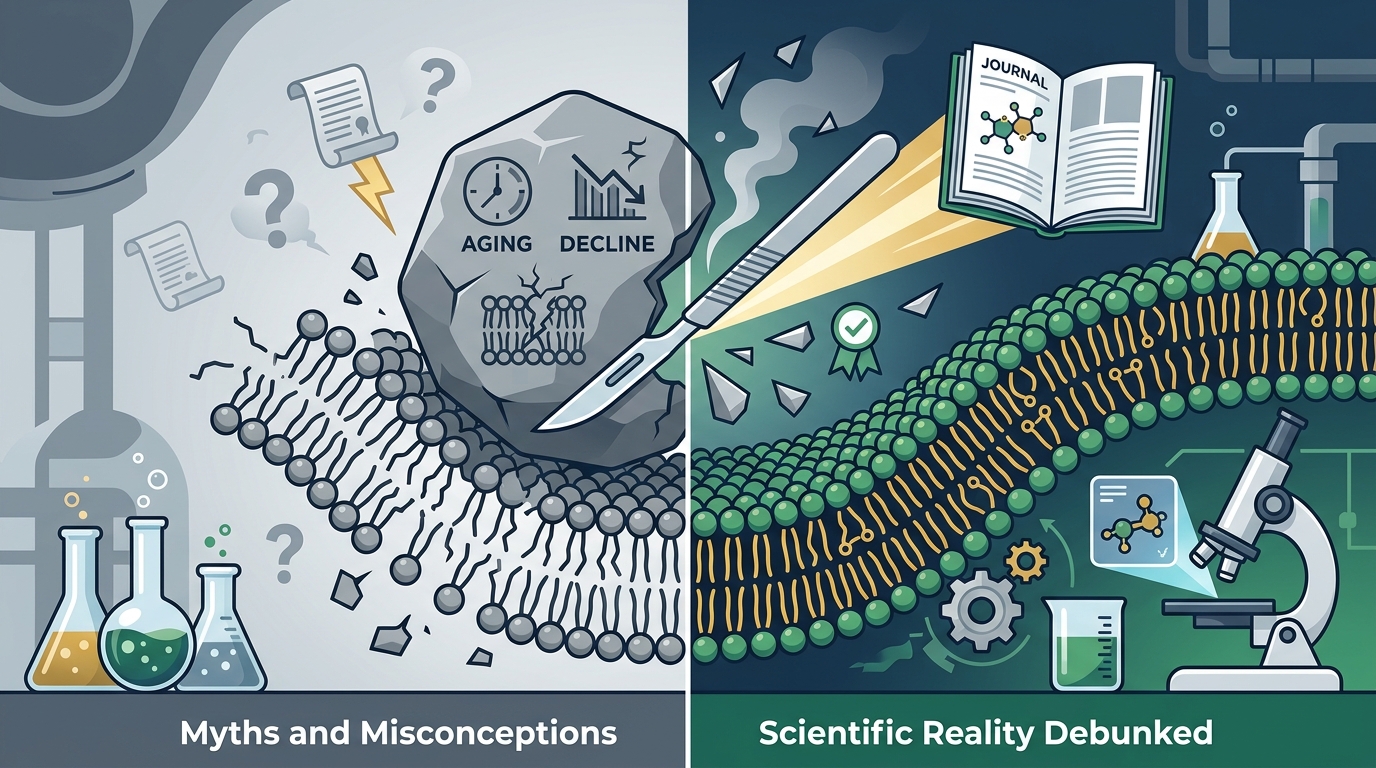
Myth 5: Low Levels Are Inevitable and Unchangeable
Another pervasive myth is that declining plasmalogen levels are an unavoidable consequence of aging that cannot be influenced. While it is true that plasmalogen levels naturally decrease as we age, this decline is not absolute or irreversible in all contexts. Factors such as oxidative stress, inflammation, and metabolic health can accelerate this decline.
Advanced health measurement allows for the monitoring of these changes over time. By addressing underlying drivers such as chronic inflammation or nutrient deficiencies, it is possible to support the body's natural biosynthetic capacity. Understanding plasmalogen levels through biomarker testing provides a clearer picture of individual health status and can guide targeted interventions. This approach shifts the narrative from passive acceptance of decline to active management of cellular health.
Key Takeaways
- Plasmalogens are specialized ether phospholipids, not standard dietary fats, and are critical for membrane integrity.
- Their unique vinyl-ether bond provides superior antioxidant protection compared to other phospholipids.
- Diet alone may not restore levels if the body's biosynthetic pathways are impaired by age or nutrient deficits.
- Plasmalogens are essential for heart, lung, and immune function, not just neurological health.
- Declining levels are a natural part of aging but can be influenced by metabolic health and oxidative stress.
- Advanced biomarker testing is necessary to accurately assess individual plasmalogen status.
- Supporting plasmalogen health requires a holistic approach including nutrition, lifestyle, and targeted supplementation.
Frequently Asked Questions
What exactly are plasmalogens?
Plasmalogens are a rare class of ether phospholipids found in high concentrations in cell membranes, particularly in the brain and heart. They play a key role in protecting cells from oxidative damage and maintaining membrane fluidity.
Do plasmalogens only affect brain health?
No. While they are crucial for neurological function, plasmalogens are also vital for cardiac health, immune system function, and lung health. They are found in nearly all tissues but are most abundant in the brain and heart.
Can I increase my plasmalogen levels through diet?
Diet provides the building blocks for plasmalogen synthesis, but the body must actively produce them. Factors like nutrient status (B12, folate) and metabolic health influence this process. Direct dietary intake of plasmalogens is limited, so supporting biosynthesis is key.
Why do plasmalogen levels drop with age?
Plasmalogen levels naturally decline due to reduced biosynthetic efficiency, increased oxidative stress, and changes in peroxisomal function. This decline is associated with increased risk of age-related diseases and reduced cellular resilience.
How are plasmalogen levels measured?
Plasmalogen levels are measured through advanced lipidomics testing, which analyzes specific lipid species in blood or other biological samples. This provides a detailed view of membrane health and oxidative stress status.
Are plasmalogen supplements safe?
Plasmalogen supplements are generally considered safe, but their efficacy depends on the source and formulation. It is important to choose products that are scientifically validated and produced under strict quality controls.
What is the link between plasmalogens and inflammation?
Plasmalogens help regulate inflammation by protecting cell membranes from oxidative damage and modulating inflammatory signaling pathways. Low plasmalogen levels are associated with chronic inflammation and increased disease risk.
Take the Next Step
Understanding the science behind plasmalogens is the first step toward optimizing your healthspan. By debunking common myths and focusing on evidence-based strategies, you can better support your body's cellular resilience. For more information on advanced health measurements and plasmalogen science, visit our advanced health measurements page. To learn more about our mission and the science behind our work, explore our about this project page. Contact us directly at contact for further inquiries.